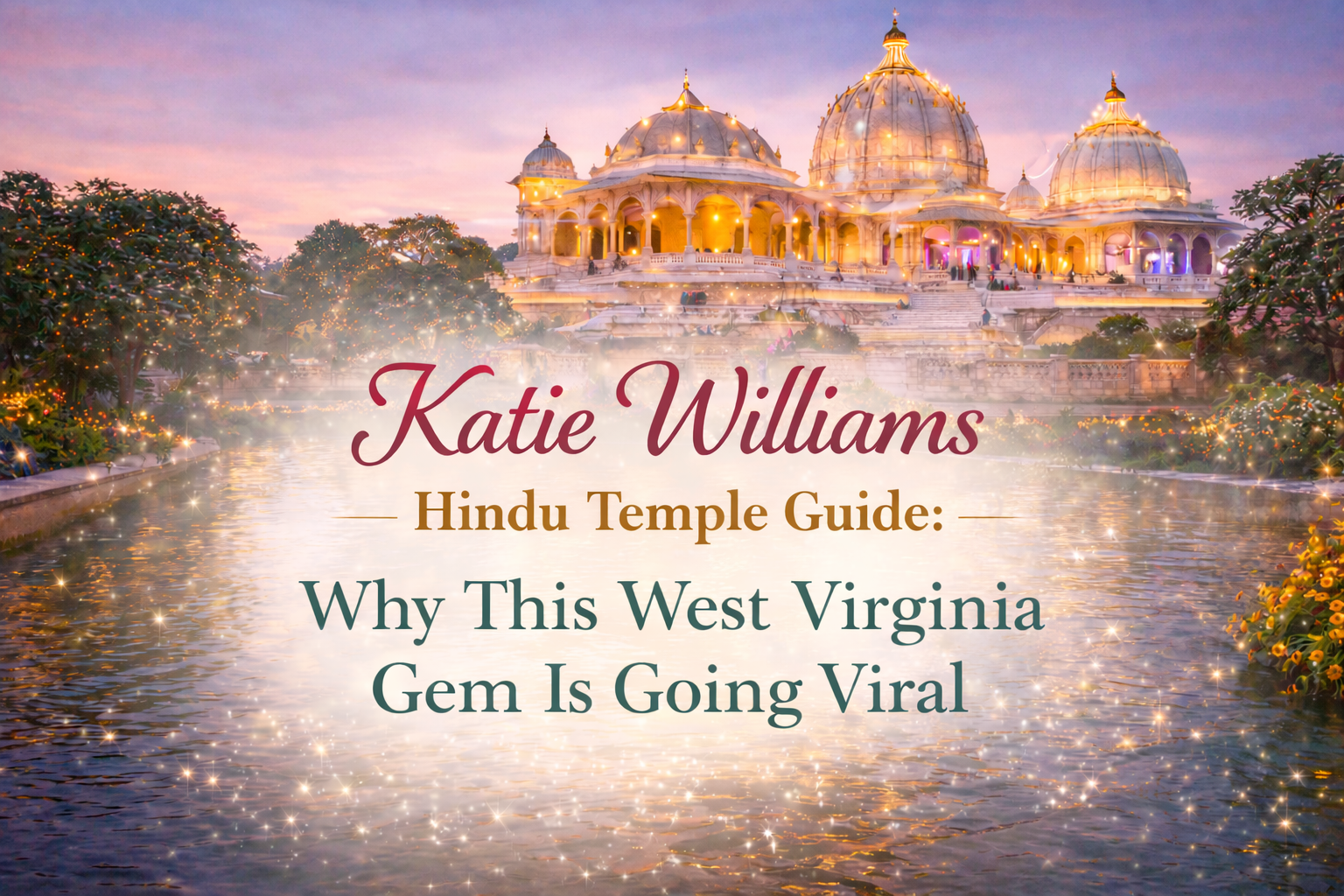
Katie Williams, a travel enthusiast who studies spiritual destinations through books, videos, and online sources, has discovered why New Vrindaban is capturing America’s attention in surprising ways.
Nestled in the Appalachian foothills of West Virginia, the New Vrindaban Hindu temple spans over 1,000 acres of rolling hills and sacred groves. What began as a small spiritual experiment in 1968 has grown into one of America’s most unique Hindu temple complexes, attracting thousands of visitors each year who seek something beyond typical sightseeing.
The Palace That Started the Buzz
At the center of New Vrindaban stands Prabhupada’s Palace of Gold, an architectural wonder that exceeds expectations of what belongs in rural Appalachia. Built as a memorial to Srila Prabhupada, the structure features intricate marble work, gold leaf detailing, crystal chandeliers, and stained glass windows that rival those in European cathedrals. The palace took seven years to complete, with devotees contributing thousands of hours of craftsmanship to create a space that honors their spiritual teacher.
The contrast alone makes it worth sharing: an ornate Indian-style palace rising from West Virginia’s green hills, complete with rose gardens, peacock paths, and reflecting pools. Visitors often say that photos do not do justice to the experience of walking through halls adorned with onyx, teakwood, and hand-painted ceilings.
Beyond the Palace Walls
The New Vrindaban Hindu temple experience goes well beyond a single building. New Vrindaban operates as a living spiritual community where ancient Vedic traditions meet American practicality:
- Temple worship: Daily ceremonies open to visitors, featuring deity worship, kirtan (devotional chanting), and philosophical discussions
- Organic gardens: Sustainable farming practices produce vegetables offered in temple ceremonies and served at Govinda’s restaurant
- Accommodation options: The Palace Lodge offers overnight stays for those wanting an extended experience in community life
The community hosts major Hindu festivals throughout the year, including Janmashtami, Gaura Purnima, and Ratha Yatra, each attracting practitioners and curious onlookers from across the United States.
The Viral Appeal Factor
Social media has expanded New Vrindaban’s reach beyond traditional spiritual seekers. The visual spectacle of the Palace of Gold generates thousands of shares on Instagram and TikTok.
Meanwhile, the 24-hour kirtan events pull in musicians and wellness enthusiasts looking for authentic meditation experiences. The location defies stereotypes, challenging viewers to reconcile images of elaborate Hindu architecture with Appalachian landscapes.
The rise in wellness tourism has also contributed. Many Americans now seek meaningful travel experiences that promote personal growth rather than just passive sightseeing. New Vrindaban offers yoga classes, meditation sessions, scenic hiking trails, and vegetarian meals, all within a framework of genuine spiritual practice instead of commercialized wellness trends.
Accessibility Meets Authenticity
Located just 60 miles from Pittsburgh and 130 miles from Columbus, New Vrindaban is easily accessible for millions of potential visitors. The community invites people regardless of their religious background, providing self-guided tours, educational programs, and chances for deeper engagement through workshops and retreats.
Conclusion
This West Virginia Hindu temple at New Vrindaban represents a uniquely American blend: Eastern spiritual traditions taking root in Western soil, creating something that honors both sources while becoming distinctly its own. Katie Williams has heardthat more people seem to be discovering this hidden West Virginia gem, which means the viral momentum may not be slowing down any time soon.